
Safari accommodation influences far more than where you sleep. Its location determines how early you reach wildlife, how much time you spend driving, what activities are possible and how connected you feel to the landscape.
The words “camp,” “lodge,” “luxury” and “mobile” are used broadly. Always review the actual room, bathroom, location, power system, meal plan and safety procedures.
Safari Lodges
Lodges generally use permanent buildings and may include reception areas, restaurants, bars, gardens and swimming pools. Room types range from simple chalets to private villas.
Lodges can suit:
- Families needing connected rooms
- Travellers who prefer solid walls
- Guests wanting pools and larger common areas
- Groups
- Longer stays near towns or park boundaries
A lodge is not automatically more comfortable than a tented camp. Standards vary widely.
Permanent Tented Camps
Permanent tented camps use canvas rooms built on platforms or foundations. Many include:
- Proper beds
- En-suite bathrooms
- Hot showers
- Flush toilets
- Solar or generator power
- Restaurant and lounge
- Private veranda
Canvas allows guests to hear the surrounding environment. At unfenced camps, wildlife may pass nearby, and staff escorts are usually required after dark.
Seasonal and Mobile Camps
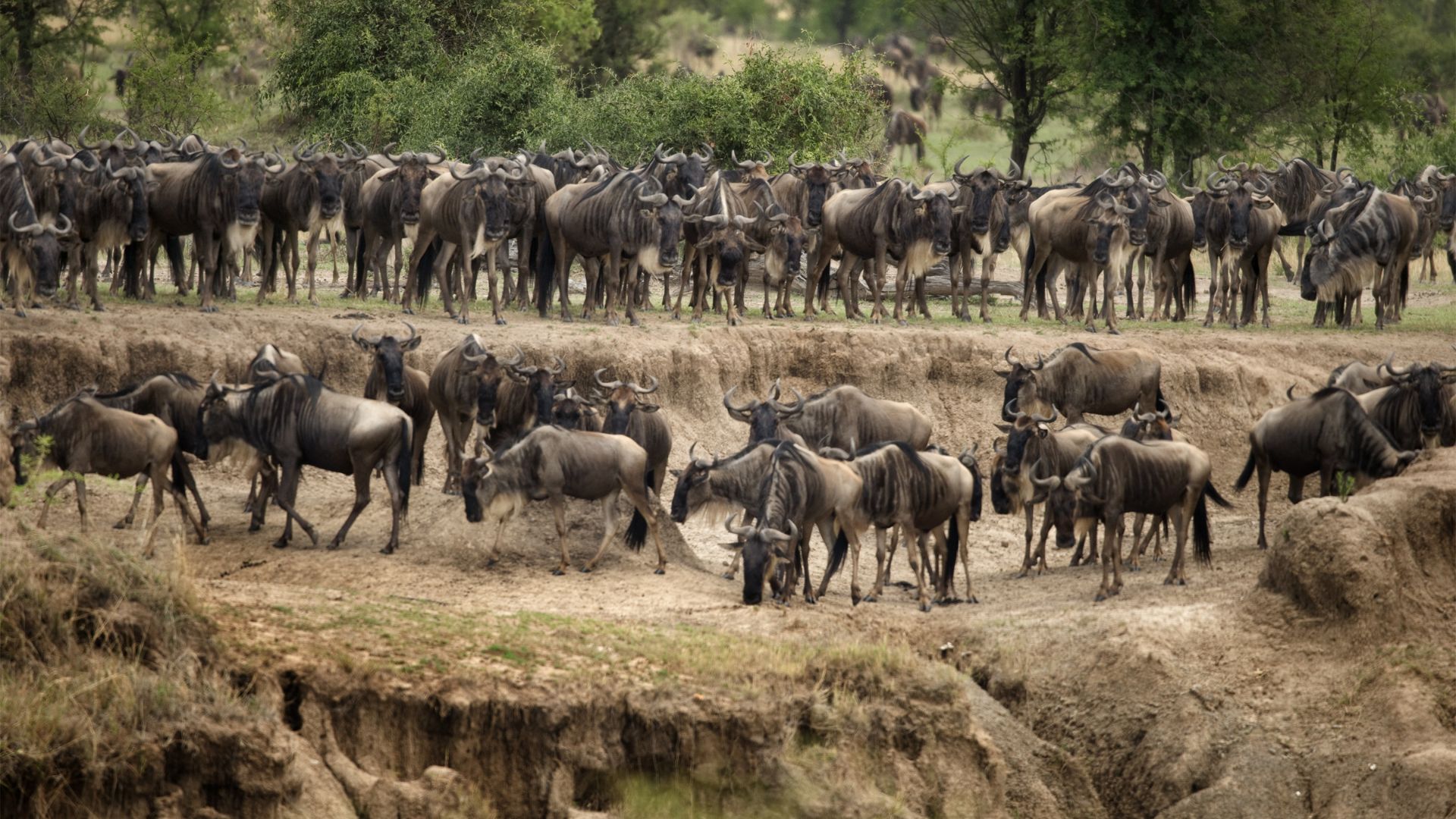
Seasonal camps move or operate in different regions according to wildlife movement, especially the Great Migration. They can provide excellent positioning in southern or northern Serengeti.
“Mobile” does not necessarily mean basic. Some mobile camps offer en-suite bathrooms, good food, comfortable beds and attentive service. Their environmental footprint and infrastructure may be lighter than permanent properties.
Ask about charging, hot water, Wi-Fi, laundry and room configuration.
Public and Private Camping
Camping options range from public campsites with shared facilities to private or special campsites supported by a mobile crew.
Camping can provide adventure and lower costs, but travellers should understand:
- Bathroom arrangements
- Sleeping equipment
- Food preparation
- Wildlife safety
- Charging and lighting
- Weather exposure
- Crew and vehicle support
Low price alone should not determine a remote camping choice.
Inside Versus Outside the Park
Inside or Deep in a Wildlife Area
Advantages:
- Faster access to game viewing
- Immersive environment
- Early and late light
- Less daily commuting
Possible disadvantages:
- Higher price
- Limited Wi-Fi or power
- More restricted movement after dark
- Fewer nearby facilities
Outside the Park or Near a Gate
Advantages:
- Wider range of prices
- Larger rooms or pools
- Access to community activities
- Easier logistics in some routes
Possible disadvantages:
- Gate queues
- Additional driving
- Less time in the wildlife area
Calculate door-to-sighting time, not just the distance shown on a map.
Accommodation Meal Plans
Safari properties commonly use:
- Bed and breakfast
- Half board
- Full board
- Full board with selected drinks
- All-inclusive packages
During safari, full board is common because alternative restaurants are not available. Confirm drinking water, soft drinks, alcohol, laundry and packed lunches.
Electricity and Connectivity
Remote camps may use solar power or generators. Electricity can be limited during the night, and high-energy devices such as hair dryers may not be supported.
Wi-Fi may be available only in public areas and can be slow. Treat connectivity as a useful extra rather than a guarantee.
Safety at Unfenced Camps
Wildlife can walk through unfenced properties. Camps provide briefings and escorts. Guests should:
- Never walk alone after dark
- Avoid keeping food in the room unless permitted
- Use a torch
- Keep doors or tent zips secured
- Supervise children
- Contact staff rather than investigating noises
The experience is safe when procedures are respected.
Choosing Accommodation by Traveller Type
Families
Prioritise family rooms, flexible meals, fencing information, pool safety and short transfer times.
Honeymooners
Look for privacy, scenic rooms, small camp size, private dining and smooth transfers.
Photographers
Location, vehicle access, charging, early departures and luggage storage matter more than decorative luxury.
Older Travellers or Guests with Limited Mobility
Ask about steps, distance to rooms, shower access, vehicle boarding and emergency support.
Solo Travellers
Check single supplements, shared activities, camp atmosphere and scheduled transfers.
Questions to Ask Before Booking
- Is the camp inside or outside the protected area?
- How long is the drive to the main game-viewing zone?
- Is the property fenced?
- Does the room have a private bathroom?
- Is hot water available at all times or on request?
- What powers the property?
- Is Wi-Fi available?
- Are drinks and laundry included?
- Are family or triple rooms available?
- What are the cancellation terms?
Frequently Asked Questions
Are tented camps safe?
Yes when professionally operated and when guests follow staff instructions. Wildlife proximity requires responsible behaviour.
Do safari camps have private bathrooms?
Many do, but not all. Confirm whether the bathroom is en-suite, shared, flush, composting or bucket-shower style.
Is it better to stay inside Serengeti?
For limited safari time, an inside or strategically located camp often provides more game-viewing time. Budget and travel style still matter.
Can lodges accommodate dietary restrictions?
Most can with advance notice. Remote kitchens need specific information early.
Related Tanzania Travel Guides
Plan Your Trip With Kilimanjaro Wildclimb Adventures
Kilimanjaro Wildclimb Adventures selects accommodation by location, service and suitability—not photographs alone. Tell us what comfort means to you, and we will recommend the right mix. Choose Your Safari Accommodation